Water Heater Repair: Common Problems, Warning Signs, and What to Expect

A reliable water heater makes everyday activities such as showering, washing dishes, and doing laundry more convenient and comfortable. When the system stops producing enough hot water, begins leaking, or starts making unusual noises, the problem can quickly disrupt normal household routines. Some water heater issues develop gradually as components wear out, while others appear suddenly and require immediate attention. Water Heater Repair Westminster can restore proper operation when the underlying problem can be safely and economically corrected. Understanding common water heater problems, repair options, and warning signs can help homeowners decide when it is time to schedule professional service.

What Are the Most Common Water Heater Problems?

Water Heater Repair

A lack of hot water is one of the most noticeable signs that a water heater is experiencing trouble. Electric models may have problems involving heating elements, thermostats, electrical connections, or power supply components. Gas-fired systems can experience different issues involving ignition, burners, controls, or the fuel supply. Because several components can produce similar symptoms, accurate diagnosis is important before replacing parts. A professional inspection can determine why the unit is no longer heating water correctly.

Inconsistent water temperature is another common problem. Homeowners may notice that hot water runs out more quickly than before, never becomes warm enough, or becomes excessively hot. Sediment buildup, faulty controls, deteriorating heating components, and other mechanical conditions can affect temperature performance. Changes in household demand can sometimes contribute as well, particularly when an older unit is already operating near its capacity. Identifying the cause helps determine whether repair, maintenance, or replacement is the appropriate solution.

What Are the Signs Your Water Heater Needs Repair?

Visible water around the heater should always be investigated. Moisture can originate from pipe connections, valves, fittings, or other serviceable components, but leakage from the tank itself may indicate a more serious problem. Even a relatively small leak can damage flooring, drywall, cabinetry, and nearby belongings if it continues unnoticed. Water may also spread beneath finished surfaces where the extent of the damage is difficult to see. Prompt inspection helps identify the source before additional property damage occurs.

Unusual noises can also indicate that the water heater needs attention. Popping, rumbling, or crackling sounds may develop when sediment accumulates inside certain tank-style systems and interferes with normal heating. Other noises can result from water pressure, expanding materials, or components that require inspection. A change from the heater’s normal operating sounds is worth monitoring, especially when accompanied by temperature or performance problems. Professional evaluation can distinguish normal operating noise from a developing mechanical issue.

How Does the Water Heater Repair Process Work?

Water heater repair generally begins with an inspection of the unit and its surrounding connections. The technician considers the symptoms reported by the homeowner and evaluates the components most likely to be responsible. Depending on the type of water heater, this can involve checking electrical components, controls, valves, heating elements, ignition systems, burners, or plumbing connections. The age and overall condition of the equipment are also considered. Accurate diagnosis helps avoid replacing parts that are still functioning properly.

Once the cause has been identified, the appropriate repair can be discussed and completed when practical. The water or energy supply may need to be shut off before work begins to create safe service conditions. Damaged or malfunctioning components are then repaired or replaced as appropriate for the system. Afterward, the heater should be tested to confirm proper operation and check for leaks or other remaining concerns. Thorough testing is an important final step in any repair.

Can a Leaking Water Heater Be Repaired?

Whether a leaking water heater can be repaired depends on where the water is coming from. Loose plumbing connections, certain valves, or other external components may sometimes be repaired or replaced without changing the entire heater. Identifying the exact source is important because water can travel along pipes or surfaces before reaching the floor. What appears to be a leaking tank may occasionally originate from another component. A careful inspection provides a more reliable diagnosis.

A tank that has developed a significant internal leak is a different situation. Corrosion or deterioration of the tank itself generally cannot be treated like a simple fitting or valve repair. In these cases, replacement of the water heater may be the more appropriate solution. Continuing to operate a seriously leaking unit can increase the risk of water damage. Homeowners should seek prompt professional assistance when water is accumulating around the appliance.

Why Is My Water Heater Not Producing Enough Hot Water?

Insufficient hot water can develop for several reasons. A heating component may no longer be operating correctly, temperature controls may need attention, or sediment accumulation may be affecting performance in a tank-style heater. Household hot-water demand can also exceed the capacity of the system, especially when several fixtures or appliances are used close together. The problem may therefore involve equipment condition, system sizing, or both. Proper diagnosis helps avoid assuming the heater has completely failed.

The age of the water heater should also be considered when performance begins declining. Components naturally wear over time, and older systems may require increasingly frequent repairs. Maintenance history can influence performance as well, particularly when sediment has been allowed to accumulate for long periods. A technician can evaluate whether a specific repair is likely to restore reliable service. This information helps homeowners make a more informed decision about the equipment.

When Is Repair Better Than Water Heater Replacement?

Repair may be practical when the water heater is otherwise in good condition and the problem involves a serviceable component. Replacing a malfunctioning thermostat, heating element, valve, or similar part can sometimes restore normal operation without the expense of a new system. The cost and complexity of the repair should be considered alongside the heater’s age and maintenance history. A relatively straightforward repair on a dependable unit can provide good value. Each situation should be evaluated individually.

Replacement may make more sense when the tank is leaking, corrosion is extensive, repairs have become frequent, or the unit is approaching the end of its practical service life. Investing repeatedly in an aging system can become less economical over time. A newer unit may also better match the household’s current hot-water needs. Comparing repair costs with the condition and expected remaining life of the existing heater provides a useful decision-making framework. The cheapest immediate option is not always the least expensive long-term choice.

Can Regular Maintenance Prevent Water Heater Repairs?

Routine maintenance can help reduce certain water heater problems and reveal developing issues before they cause a complete loss of hot water. Tank-style systems may benefit from maintenance related to sediment accumulation, valves, connections, and other components according to manufacturer recommendations. Regular observation can also identify small leaks or corrosion before significant water damage occurs. Maintenance requirements differ among conventional tank, tankless, gas, and electric systems. Following the recommendations for the specific equipment is important.

Homeowners can also monitor changes in everyday performance. Longer heating times, fluctuating temperatures, unusual sounds, visible corrosion, and unexplained moisture should not be ignored simply because the heater still operates. Small changes can provide early warning that a component is beginning to fail. Addressing these symptoms early may allow a simpler repair. Preventive attention can help reduce the likelihood of an unexpected hot-water emergency.

Why Should Water Heater Repair Be Handled Professionally?

Water heaters combine plumbing with electricity, gas, combustion, high temperatures, or pressurized water depending on the system. Incorrect repairs can therefore create hazards in addition to causing further equipment damage. Professional technicians have the tools and knowledge needed to isolate energy sources, test components, and determine why the system is malfunctioning. They can also evaluate whether a repair can be completed safely and appropriately. This is especially important when the problem involves gas, electrical components, pressure controls, or significant leakage.

Professional service also helps identify related issues that may not be obvious from the original symptom. A temperature problem, for example, may have several potential causes that require testing to distinguish. Simply replacing the first suspected component can waste time and money if another issue is responsible. A systematic diagnosis provides a clearer understanding of the heater’s overall condition. Proper repair should restore performance without overlooking safety or reliability concerns.

What Should You Do During a Water Heater Emergency?

A major leak requires quick action because water can spread rapidly through surrounding areas. If it can be done safely, the water supply to the heater may need to be shut off to reduce continued leakage. Homeowners should avoid standing water near electrical equipment or attempting repairs involving energized components. Gas odors or other signs of a potentially hazardous fuel-related problem require additional caution. Emergency conditions should be handled according to appropriate safety procedures and professional guidance.

After the immediate source has been controlled, the surrounding area should be checked for water damage. Flooring, walls, stored belongings, and nearby equipment may require drying or additional attention depending on the extent of the leak. The water heater should be inspected before being returned to normal service if its condition is uncertain. Emergency repair is not only about restoring hot water but also about protecting the property from additional damage. Prompt response can significantly reduce the consequences of a sudden failure.

Final Thoughts

Water heater repair can resolve many common problems involving inconsistent temperatures, inadequate hot water, malfunctioning components, unusual noises, and certain types of leaks. The right solution begins with identifying the actual cause and evaluating the overall condition of the equipment. While serviceable components can often be repaired or replaced, a severely deteriorated or leaking tank may make water heater replacement the more practical option. Routine maintenance and attention to early warning signs can help reduce unexpected failures and extend reliable performance. When a water heater develops significant plumbing, gas, electrical, or pressure-related problems, professional service provides the safest path toward restoring dependable hot water.

Architectural Stairway Metal Railing Options for Your Business

metal works

Stairways are more than functional connections between floors in a commercial property. Their design can influence the appearance of an office, retail store, restaurant, hotel, showroom, apartment building, or other professional environment. One of the most important elements of a commercial staircase is the railing, which contributes to safety while also becoming a highly visible architectural feature.

Architecture Stairway Metal Railing offers businesses numerous possibilities, ranging from minimalist steel systems to decorative custom-fabricated designs. Understanding the available options can help business owners select a railing system that complements their property while supporting durability, functionality, and long-term value.

Why Choose Metal Railings for a Business Stairway?

Metal is a popular railing material for commercial stairways because it combines strength with considerable design flexibility. Steel, stainless steel, aluminum, and other metals can be fabricated into railing systems that work with contemporary, industrial, traditional, or highly customized interiors. Metal components can also be shaped and connected to suit different stair configurations. This versatility makes architectural metalwork suitable for both straightforward commercial staircases and prominent feature stairs. A carefully designed railing can become an integral part of the building’s overall appearance.

Durability is another important advantage for businesses. Commercial stairways may experience substantially more daily traffic than residential stairs, especially in offices, retail environments, hospitality properties, and multi-unit buildings. Railings must withstand frequent contact while maintaining secure connections and a professional appearance. Appropriate materials and protective finishes help metal systems perform reliably under these demanding conditions. Long-lasting construction can also reduce the need for frequent replacement.

What Are the Main Architectural Metal Railing Options?

Steel railings are one of the most versatile choices for commercial stairways. Steel can be fabricated into simple posts and horizontal rails, vertical picket systems, geometric patterns, or fully customized architectural designs. It also accepts various protective finishes, allowing the railing to coordinate with surrounding doors, frames, furniture, and other building features. Steel’s structural properties make it suitable for many interior and exterior applications when properly designed and protected. Custom fabrication provides considerable control over the final appearance.

Stainless steel offers another distinctive option, particularly for businesses seeking a clean and contemporary appearance. Its recognizable metallic finish works particularly well in modern offices, hospitality environments, healthcare facilities, and upscale commercial interiors. Aluminum can also be considered where lighter weight and corrosion resistance are important design factors. Each material has different characteristics related to strength, appearance, maintenance, and cost. Selecting the right one requires balancing practical needs with architectural goals.

Are Modern Minimalist Metal Railings a Good Choice?

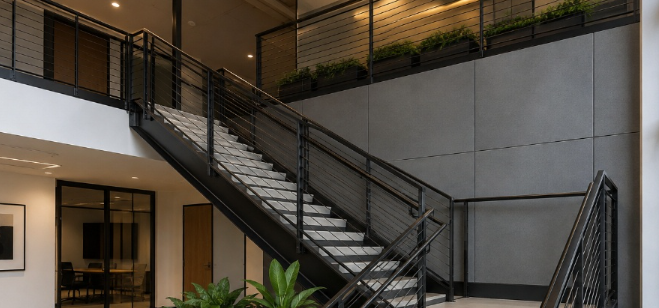
Minimalist railings are an excellent option for businesses seeking a contemporary architectural style. These systems typically emphasize straight lines, simple profiles, uncluttered connections, and carefully proportioned components. Vertical metal balusters can create a clean appearance, while other configurations may use horizontal elements where appropriate and permitted. Dark finishes are often paired with modern interiors, although metallic and lighter finishes can also produce attractive results. Simplicity allows the surrounding architecture to remain visually prominent.

Minimalist railing systems can work particularly well in offices, showrooms, retail environments, and modern hospitality spaces. Because the design contains fewer decorative elements, details such as weld quality, spacing, alignment, and connections become especially noticeable. Precision fabrication is therefore essential to achieving a refined appearance. Even a simple railing can look highly customized when every component is carefully proportioned. Minimalist does not have to mean generic.

Can Metal Railings Be Combined With Glass?

Metal and glass are frequently combined to create open, contemporary commercial stairways. The metal structure provides support while transparent glass panels preserve visibility through the staircase and surrounding interior. This can help spaces feel larger and allow natural or artificial light to travel more freely between areas. Stainless steel and other clean-lined metal systems are especially compatible with glass. The combination can create a polished architectural feature in highly visible business environments.

Glass railing systems require careful planning because the glass, supports, handrails, and connections must function together as a complete assembly. Panel dimensions and mounting details should be selected according to the intended application and applicable requirements. Maintenance should also be considered because glass may require more frequent cleaning in high-traffic locations. When designed appropriately, metal and glass can balance strength with visual openness. The result can become a defining feature of a commercial interior.

What About Decorative and Custom Metal Railings?

Not every commercial property benefits from a minimalist design. Restaurants, boutique hotels, event spaces, historic properties, and luxury businesses may prefer decorative architectural metalwork that creates a stronger visual identity. Custom railing designs can incorporate curves, geometric patterns, ornamental elements, repeating shapes, or details inspired by the surrounding architecture. These features allow the staircase to contribute to the atmosphere of the business. Decorative fabrication can transform a functional railing into a memorable design element.

Customization also allows businesses to create metalwork that coordinates with other architectural components throughout the property. Stair railings can visually relate to gates, partitions, balconies, exterior fencing, decorative screens, or metal signage. Repeating similar materials, finishes, and patterns helps create consistency throughout the building. Custom fabrication provides greater control than relying solely on standardized railing products. A cohesive design can make the entire commercial environment feel more intentional.

Are Cable Railings Suitable for Commercial Stairways?

Cable railing systems can provide a contemporary appearance while maintaining relatively open views around a staircase. These systems typically combine metal posts and handrails with tensioned cables, creating a lightweight visual effect compared with solid panels or closely spaced balusters. They are often associated with modern, industrial, and transitional architecture. Businesses seeking an understated railing may find this option appealing. The streamlined appearance can complement open commercial interiors particularly well.

However, cable railing should be evaluated carefully for the specific commercial application. Cable spacing, tension, structural supports, stair geometry, and applicable building requirements all influence whether a particular design is appropriate. Regular inspection may also be necessary to ensure components remain properly tensioned and secure. A professional railing designer or fabricator can evaluate these factors before fabrication begins. Appearance should always be balanced with safety and performance requirements.

How Can Metal Railing Finishes Change the Design?

The finish applied to architectural metalwork can dramatically influence its final appearance. Powder-coated finishes can provide a consistent surface while offering a wide range of visual possibilities. Dark finishes can produce a bold contemporary look, while lighter or neutral finishes may blend more subtly with the surrounding architecture. Stainless steel may be polished or brushed depending on the desired appearance. Finish selection should be treated as an important part of the overall railing design.

Environmental exposure must also be considered when selecting a finish. Exterior commercial stairways face rain, humidity, temperature changes, pollutants, and other conditions that may accelerate deterioration. Interior railings may experience frequent touching, cleaning, and impacts from daily business activity. Choosing a finish appropriate for the environment helps preserve both appearance and durability. Regular cleaning and timely repair of damaged coatings further extend the service life of the metalwork.

What Should Businesses Consider Before Choosing a Railing?

Safety and applicable building requirements should be considered from the beginning of any commercial stair railing project. Railing height, handrail dimensions, openings, structural loads, stair geometry, and accessibility considerations may all affect the final design. These requirements can vary according to the building, occupancy, and local regulations. Designing around them from the beginning is generally more efficient than modifying an aesthetic concept later. Professional planning helps combine architectural goals with practical requirements.

Businesses should also consider how the staircase will be used every day. A heavily traveled public staircase has different needs from a stairway used occasionally by employees. Cleaning requirements, exposure to carts or equipment, expected traffic, surrounding materials, and future maintenance should all influence material and finish selection. Budget should include fabrication and installation as well as long-term upkeep. Evaluating the entire lifecycle of the railing supports a better investment.

What Are the Benefits of Custom-Fabricated Metal Railings?

Custom fabrication allows a railing system to be designed specifically around the dimensions and architecture of a particular commercial space. Rather than adapting standardized components to an unusual staircase, fabricators can create posts, rails, panels, and connections that fit the project accurately. This is especially valuable for curved stairs, unusual landings, architectural feature staircases, and renovation projects. Precise fabrication can improve both appearance and installation quality. The finished railing becomes part of the architecture rather than an accessory added afterward.

Businesses can also use custom fabrication to achieve a more distinctive visual identity. Materials, profiles, patterns, finishes, and decorative elements can be coordinated with the property’s overall design language. A carefully executed staircase can make a strong impression on customers, tenants, employees, and visitors. Because commercial interiors often depend on memorable details to establish character, custom architectural metalwork can provide considerable design value. Quality fabrication combines visual appeal with everyday functionality.

Final Thoughts

Choosing the right architectural stairway metal railing for your business requires balancing appearance, durability, maintenance, safety, and everyday functionality. Steel, stainless steel, aluminum, glass-and-metal systems, cable railings, and custom decorative metalwork provide options for a wide variety of commercial environments. Modern businesses may prefer clean minimalist lines, while hospitality or luxury properties may benefit from more distinctive custom fabrication. Material selection and finish should also reflect whether the railing will be installed indoors or exposed to exterior conditions. With careful planning and professional fabrication, an architectural metal railing can make a commercial stairway safer and more functional while turning it into an attractive feature that strengthens the overall character of the business.

Pest Control Services That Protect More Than Just Your Property

A clean, comfortable property should be a place where people can relax without worrying about unwanted pests. Unfortunately, insects and rodents are remarkably adaptable. They search for food, water, and shelter year-round, often finding opportunities to invade homes and commercial buildings unnoticed until the infestation has grown. Whether the problem begins with a few ants in the kitchen, scratching sounds behind the walls, or insects appearing around windows and doors, ignoring the warning signs can lead to larger and more expensive issues over time.

Professional Pest Control Fort Pierce services are designed to do much more than eliminate visible pests. They provide a complete approach that identifies the source of the infestation, removes existing populations, and helps prevent future invasions. Instead of relying on temporary fixes, property owners gain long-term protection that supports healthier living conditions, preserves building materials, and minimizes unnecessary repair costs. Investing in professional pest management is ultimately an investment in the safety, cleanliness, and longevity of a property.

pest control

One of the biggest misconceptions about pest control is that it only becomes necessary after an infestation is obvious. In reality, many pests remain hidden for weeks or even months before they become visible. During that time, they continue to reproduce, nest, contaminate surfaces, and cause structural or health-related concerns. By the time homeowners notice the problem, the infestation may already require extensive treatment. This is why modern pest control services emphasize prevention just as much as elimination.

Professional technicians begin by performing a detailed inspection of the property. Rather than immediately applying treatments, they carefully examine both interior and exterior areas to determine what pests are present, how they entered the building, and what conditions are allowing them to survive. Every property has unique characteristics, from moisture levels and landscaping to structural gaps and storage practices. Understanding these factors allows pest control specialists to create customized treatment plans instead of relying on generic solutions that may only provide temporary relief.

Many pests are attracted to environments that people unintentionally create. Small plumbing leaks, overflowing trash bins, cluttered storage rooms, standing water, food crumbs, and tiny cracks around foundations all provide ideal conditions for insects and rodents. While these issues may appear minor, they often become the starting point for persistent infestations. A professional service identifies these contributing factors and recommends practical improvements that reduce future pest activity.

Among the greatest advantages of hiring a pest control service is access to specialized knowledge. Different pests require different treatment methods, and confusing one species for another can result in ineffective control efforts. Certain insects live underground, others nest inside walls, while some become active only during specific seasons. Likewise, rodents behave differently depending on available food sources and environmental conditions. Professionals understand these behavioral patterns and use them to develop treatment strategies that target the pests where they are most vulnerable.

Modern pest control has evolved significantly over the years. Instead of depending solely on repeated chemical applications, today’s services often focus on integrated management techniques that combine inspection, sanitation recommendations, exclusion methods, monitoring, and carefully selected treatments. This balanced approach reduces unnecessary product use while improving long-term effectiveness. It also recognizes that sustainable pest management requires addressing the root causes rather than simply eliminating visible insects.

An effective pest control program usually includes several essential components:

  1. Comprehensive property inspections that identify active infestations and potential risk factors.
  2. Customized treatment plans designed around the specific pest species and property conditions.
  3. Preventive recommendations that reduce future opportunities for pests to enter and establish colonies.
  4. Scheduled monitoring and follow-up visits to ensure treatments remain effective over time.

Each of these elements contributes to a stronger defense against recurring pest problems. When combined, they create a proactive strategy instead of a reactive response.

Health protection remains one of the primary reasons people invest in professional pest control services. Many common pests carry bacteria, contaminate food, trigger allergies, or worsen respiratory conditions. Rodents can spread harmful microorganisms through droppings and urine. Cockroaches leave behind allergens that may contribute to asthma symptoms, particularly among children and older adults. Flying insects frequently move between waste materials and food preparation areas, increasing the potential for contamination. Even when pests do not directly transmit disease, their presence creates an environment that many people find stressful and unsanitary.

Property damage is another significant concern that often goes unnoticed until repairs become costly. Certain pests chew through wood, insulation, wiring, paper products, fabrics, and stored belongings. Others tunnel beneath foundations or weaken structural components over extended periods. Unlike damage caused by sudden events, pest-related destruction often develops gradually, making it difficult for property owners to recognize the severity until professional inspections reveal the extent of the problem. Preventive pest control services help reduce these risks before extensive repairs become necessary.

Businesses also benefit greatly from maintaining a consistent pest management program. Customers expect clean, hygienic environments, and even a single pest sighting can affect a company’s reputation. Employees perform better when working in safe, sanitary conditions, while inventory and equipment remain protected from contamination and damage. Routine inspections and preventive treatments help businesses maintain operational continuity while minimizing the possibility of unexpected pest-related disruptions.

Seasonal changes often influence pest behavior, making year-round pest management especially valuable. During warmer months, insects become increasingly active as breeding cycles accelerate. Cooler temperatures encourage rodents and other pests to seek warmth indoors. Heavy rainfall can drive underground pests toward buildings, while dry conditions may encourage insects to search for indoor water sources. Because pest activity shifts throughout the year, regular inspections provide continuous protection against changing environmental conditions.

Many homeowners initially attempt to solve pest problems using products purchased from retail stores. While these products may temporarily reduce visible pest activity, they rarely eliminate the underlying infestation. Surface sprays often kill only the insects that come into direct contact with the treatment, leaving hidden nests untouched. Traps may capture individual rodents without addressing entry points or breeding populations. Without understanding the full scope of the infestation, do-it-yourself efforts frequently become ongoing cycles of temporary relief followed by recurring problems.

Professional pest control services break this cycle by approaching the issue systematically. Rather than focusing only on the symptoms, technicians identify nesting areas, breeding sites, moisture sources, structural vulnerabilities, and environmental conditions that support pest survival. Addressing these factors dramatically increases the likelihood of achieving lasting results while reducing repeated infestations.

Preventive maintenance should never be viewed as an unnecessary expense. In many cases, routine inspections cost significantly less than repairing structural damage, replacing contaminated materials, or addressing widespread infestations that have been allowed to expand unchecked. Similar to maintaining heating systems, plumbing, or roofing, regular pest control helps preserve the overall condition of a property while reducing unexpected financial burdens.

Property owners can further strengthen professional treatments by adopting several simple habits that discourage pest activity. These preventive measures work best when combined with regular inspections and customized pest management plans.

Some of the most effective preventive practices include:

  1. Store food in tightly sealed containers and clean spills promptly.
  2. Repair plumbing leaks and eliminate sources of standing water.
  3. Seal gaps around doors, windows, utility lines, and foundations.
  4. Keep storage areas organized to reduce hiding places.
  5. Trim vegetation that touches exterior walls or roofing.
  6. Schedule regular inspections before pest populations become established.

Although these habits appear straightforward, their combined effect can significantly reduce the likelihood of future infestations.

Another important benefit of professional pest control services is peace of mind. Property owners no longer need to worry about whether hidden infestations are developing behind walls or beneath floors. Routine monitoring provides reassurance that experienced professionals are continually evaluating the property and responding quickly whenever new pest activity appears. This ongoing partnership helps maintain confidence that the environment remains clean, comfortable, and well protected.

Choosing a reliable pest control service involves more than comparing prices. Experience, thorough inspection procedures, customized treatment plans, follow-up support, and clear communication all contribute to better long-term outcomes. A quality provider explains the treatment process, discusses realistic expectations, and offers practical recommendations that property owners can implement between service visits. This collaborative approach leads to stronger, longer-lasting pest management results than one-time treatments alone.

As technology continues advancing, pest control services are becoming increasingly precise and efficient. Improved monitoring systems, enhanced inspection techniques, targeted application methods, and data-driven treatment planning allow professionals to deliver more effective solutions while minimizing unnecessary environmental impact. These advancements enable technicians to detect problems earlier, respond more accurately, and continuously improve preventive strategies based on observed pest activity.

Ultimately, pest control services are about protecting the overall quality of a property rather than simply removing unwanted insects or rodents. They help preserve structural integrity, safeguard health, improve comfort, and reduce long-term maintenance costs. Instead of reacting only after infestations become severe, proactive pest management creates a protective barrier that keeps problems from developing in the first place.

Whether the property is a family home, rental unit, office, warehouse, or commercial facility, professional pest control remains one of the most practical investments for maintaining a safe and healthy environment. Through comprehensive inspections, customized treatment strategies, preventive recommendations, and ongoing monitoring, property owners gain lasting protection against pests while preserving the value and functionality of their investment. In the long run, consistent pest control services provide benefits that extend far beyond eliminating unwanted visitors—they help create cleaner spaces, healthier surroundings, and greater confidence that the property is prepared to withstand future pest challenges.

The Hidden Art of Cabinet Refinishing for Modern Homes

Cabinet Refinishing Sacramento can completely change how a room feels and it is a process that blends skill with design. Instead of full replacement, it gives new life to existing structures and this makes it both creative and resourceful. The practice of refinishing is far older than many realize because in earlier times, families treated cabinetry as heirlooms. Instead of discarding, they refreshed the wood and finish, and this tradition continues but has now evolved with style.

Cabinet Refinishing

One of the fascinating aspects is surface preparation since a cabinet must be cleaned deeply before any step. Residues of grease or dust affect adhesion badly, so patience during this stage prevents costly imperfections later. Sanding is often viewed as tedious yet rewarding because the process reveals the raw beauty beneath layers. Different grits produce different textures and smoothness levels and craftsmen often combine hand sanding with mechanical tools.

Color choice is where refinishing becomes personal as some prefer natural wood tones for warmth while others enjoy bold paints that modernize instantly. Each option communicates personality and intention, and textures also play a growing role in refinishing trends. Instead of only smooth gloss, people experiment with matte which reduces glare and highlights natural grains. Matte finishes also make fingerprints less noticeable in kitchens, making them practical and stylish.

Stains bring another dimension to refinishing choices since light stains highlight subtle grains without hiding details while dark stains create drama and contemporary appeal. Layering stains can even mimic exotic woods and this technique adds artistry to ordinary cabinetry. Eco-friendly refinishing has become increasingly important today because water-based products release fewer harmful fumes indoors. They dry faster while reducing environmental impact significantly, something especially valued in homes with children.

Another rising practice is blending refinishing with accents such as metal trims or glass inserts for brightness. These accents elevate the entire look affordably and show that even small details can transform a space. Cabinet hardware is often overlooked yet transformative because new handles or hinges complement refinished surfaces beautifully. The tactile feel adds both function and luxury, making this simple upgrade complete the new look.

Lighting also influences the effect of refinished cabinets because soft under-cabinet lighting highlights subtle color changes while overhead lights can intensify or soften final tones. Strategic placement enhances visual depth in kitchens and can make refinishing appear even more striking. A unique technique is distressing during refinishing which creates a rustic, weathered appearance intentionally. This mimics the charm of furniture aged naturally, making rustic interiors benefit greatly from this approach.

High-gloss finishes, however, carry a futuristic appeal because they reflect light and give sleek, polished surfaces. Such styles often match modern minimalist interiors and they also resist moisture and enhance durability. Cabinet refinishing is not only about aesthetics because it can raise the property value of a home. Potential buyers notice updated cabinetry immediately and this makes refinishing an investment as well as a design choice.

Another benefit is cost efficiency compared to replacements since full cabinet replacement requires labor and new materials. Refinishing reuses what already exists effectively and the savings can be allocated to other upgrades. Time efficiency is another advantage worth noting because replacement may take weeks to complete while refinishing usually requires days. This minimizes disruption for households significantly and makes refinishing more appealing.

DIY refinishing has become popular with tutorials as many homeowners enjoy the satisfaction of crafting. Yet professional refinishing ensures long-lasting and uniform results, and each choice depends on skill and patience levels. One exciting development is digital finish matching because programs now analyze colors from photos instantly. This allows precise replication of desired shades, reducing guesswork and wasted materials.

Smart finishes are also emerging in the industry with coatings that resist bacteria and improve hygiene while others adapt to temperature changes for longevity. These innovations redefine what refinishing can achieve and show the future potential of the craft. Refinishing trends often follow interior design cycles where minimalist interiors demand neutral cabinets and maximalist styles embrace vibrant hues. Each reflects broader lifestyle movements in design and shows how cabinetry adapts with time.

Another layer is cultural influence on refinishing since certain patterns mimic traditional motifs or artistry while others lean toward futuristic or industrial themes. Cabinetry often becomes the storytelling piece in spaces, carrying cultural or personal meaning. Cabinet refinishing is also linked to sustainability because reusing structures minimizes landfill waste. Refinishing keeps functional wood in circulation longer, resonating with eco-conscious homeowners globally.

Moisture-resistant products are gaining popularity as kitchens and bathrooms face constant exposure to humidity. Special coatings prevent swelling and warping effectively, preserving functionality over many years. Fire-resistant finishes are also entering the market, providing safety without compromising appearance. This suits both residential and commercial spaces, proving that safety and style can work hand in hand.

Cabinet refinishing even influences mental well-being since a refreshed space can uplift mood instantly. Colors affect psychology and emotional states deeply, where warm tones soothe while bright tones energize. Acoustic refinishing materials are a newer innovation as they reduce echo within busy kitchen environments. Cabinets coated with such finishes enhance sound comfort, adding hidden value to interiors.

One overlooked aspect is refinishing smell control as certain coatings include odor-neutralizing properties. This keeps kitchens fresh despite frequent cooking and merges functionality with everyday comfort seamlessly. Cabinet refinishing can also support smart home designs because surfaces can integrate with sensors invisibly. This enables touchless opening or soft-close automation, merging technology with craftsmanship in surprising ways.

Maintenance after refinishing requires conscious effort since regular cleaning with mild solutions preserves surfaces. Avoiding harsh chemicals prevents dulling over time, ensuring cabinets stay vibrant for years. Custom artistry is another exciting direction as cabinets may feature hand-painted designs or murals. This transforms cabinetry into functional art pieces and blurs the line between utility and creativity.

Metallic finishes bring futuristic elegance to kitchens with gold or silver tones reflecting luxury tastefully. These finishes also resist scratches remarkably well and their shine adds glamour to daily spaces. Cabinet refinishing supports generational preservation of furniture because families pass down cabinets with sentimental value. Refinishing maintains history while updating visual appeal, connecting the past with present design needs.

Outdoor refinishing is also gaining traction as patio kitchens or outdoor storage use durable coatings. Such finishes resist sun, rain, and temperature shifts, broadening the role of cabinetry. Some refinishing projects involve hybrid material layering with wood combined with resin to create stronger panels. This adds durability while keeping a natural look, suiting homes that seek long-term resilience.

Invisible finishes are another creative innovation since they appear natural but protect from UV rays. This allows wood tones to shine authentically while invisible coatings maintain both beauty and defense. Cabinet refinishing contributes to personal identity expression because choices in color and finish mirror individuality. It transforms a kitchen into a reflection of taste, making a house feel personal.

Psychologists suggest refinished spaces affect productivity because a bright kitchen encourages healthier food habits. An organized office with new cabinets boosts focus and design directly shapes daily lifestyle patterns. The global movement of circular design emphasizes refinishing as objects are reused, reimagined, and repurposed creatively. Cabinetry becomes a central example of this philosophy, embodying this shift in practical ways.

Learning refinishing techniques builds transferable skills as it develops patience, precision, and artistic sensitivity. These traits benefit other crafts and professions, making cabinetry a medium for lifelong learning. Cabinet refinishing has entered luxury markets as well since some projects involve rare veneers and detailing. Such craftsmanship turns cabinets into signature investments, merging art with high-end design.

Urban living also shapes refinishing preferences today because smaller apartments demand lighter cabinet colors. These create illusions of space and brightness, making refinishing strategic for compact environments. Refinishing projects may even reduce renovation stress since the process involves less demolition and noise. It allows families to remain in homes peacefully, reducing psychological strain during transformation.

Experimentation is another hallmark of refinishing today as people test unconventional shades like pastels or neons while others mix dual tones for layered depth. These experiments inspire bold interior storytelling and make cabinetry a centerpiece of design exploration. Cabinet refinishing thus bridges tradition with innovation, keeping heritage alive while embracing new science. Each project reveals artistry hidden within wood and the result always enhances spaces meaningfully.

The future of cabinet refinishing is promising with new materials, finishes, and smart technologies continuing to reshape how people view cabinetry. Beauty and function will remain its core values and refinishing will always serve as more than a surface update. It is a declaration of sustainability and creativity where each cabinet tells a renewed story of design. In every home, the art of refinishing lives on and will continue to evolve with every generation.