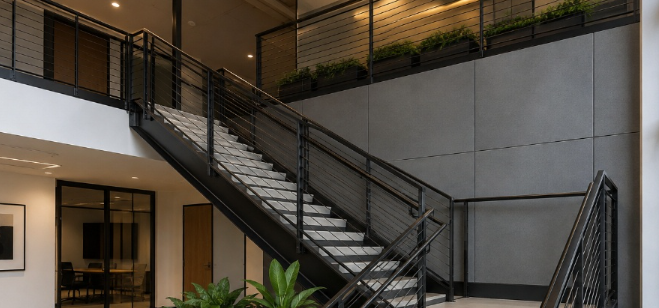
Stairways are more than functional connections between floors in a commercial property. Their design can influence the appearance of an office, retail store, restaurant, hotel, showroom, apartment building, or other professional environment. One of the most important elements of a commercial staircase is the railing, which contributes to safety while also becoming a highly visible architectural feature.
Architecture Stairway Metal Railing offers businesses numerous possibilities, ranging from minimalist steel systems to decorative custom-fabricated designs. Understanding the available options can help business owners select a railing system that complements their property while supporting durability, functionality, and long-term value.
Why Choose Metal Railings for a Business Stairway?
Metal is a popular railing material for commercial stairways because it combines strength with considerable design flexibility. Steel, stainless steel, aluminum, and other metals can be fabricated into railing systems that work with contemporary, industrial, traditional, or highly customized interiors. Metal components can also be shaped and connected to suit different stair configurations. This versatility makes architectural metalwork suitable for both straightforward commercial staircases and prominent feature stairs. A carefully designed railing can become an integral part of the building’s overall appearance.
Durability is another important advantage for businesses. Commercial stairways may experience substantially more daily traffic than residential stairs, especially in offices, retail environments, hospitality properties, and multi-unit buildings. Railings must withstand frequent contact while maintaining secure connections and a professional appearance. Appropriate materials and protective finishes help metal systems perform reliably under these demanding conditions. Long-lasting construction can also reduce the need for frequent replacement.
What Are the Main Architectural Metal Railing Options?
Steel railings are one of the most versatile choices for commercial stairways. Steel can be fabricated into simple posts and horizontal rails, vertical picket systems, geometric patterns, or fully customized architectural designs. It also accepts various protective finishes, allowing the railing to coordinate with surrounding doors, frames, furniture, and other building features. Steel’s structural properties make it suitable for many interior and exterior applications when properly designed and protected. Custom fabrication provides considerable control over the final appearance.
Stainless steel offers another distinctive option, particularly for businesses seeking a clean and contemporary appearance. Its recognizable metallic finish works particularly well in modern offices, hospitality environments, healthcare facilities, and upscale commercial interiors. Aluminum can also be considered where lighter weight and corrosion resistance are important design factors. Each material has different characteristics related to strength, appearance, maintenance, and cost. Selecting the right one requires balancing practical needs with architectural goals.
Are Modern Minimalist Metal Railings a Good Choice?
Minimalist railings are an excellent option for businesses seeking a contemporary architectural style. These systems typically emphasize straight lines, simple profiles, uncluttered connections, and carefully proportioned components. Vertical metal balusters can create a clean appearance, while other configurations may use horizontal elements where appropriate and permitted. Dark finishes are often paired with modern interiors, although metallic and lighter finishes can also produce attractive results. Simplicity allows the surrounding architecture to remain visually prominent.
Minimalist railing systems can work particularly well in offices, showrooms, retail environments, and modern hospitality spaces. Because the design contains fewer decorative elements, details such as weld quality, spacing, alignment, and connections become especially noticeable. Precision fabrication is therefore essential to achieving a refined appearance. Even a simple railing can look highly customized when every component is carefully proportioned. Minimalist does not have to mean generic.
Can Metal Railings Be Combined With Glass?
Metal and glass are frequently combined to create open, contemporary commercial stairways. The metal structure provides support while transparent glass panels preserve visibility through the staircase and surrounding interior. This can help spaces feel larger and allow natural or artificial light to travel more freely between areas. Stainless steel and other clean-lined metal systems are especially compatible with glass. The combination can create a polished architectural feature in highly visible business environments.
Glass railing systems require careful planning because the glass, supports, handrails, and connections must function together as a complete assembly. Panel dimensions and mounting details should be selected according to the intended application and applicable requirements. Maintenance should also be considered because glass may require more frequent cleaning in high-traffic locations. When designed appropriately, metal and glass can balance strength with visual openness. The result can become a defining feature of a commercial interior.
What About Decorative and Custom Metal Railings?
Not every commercial property benefits from a minimalist design. Restaurants, boutique hotels, event spaces, historic properties, and luxury businesses may prefer decorative architectural metalwork that creates a stronger visual identity. Custom railing designs can incorporate curves, geometric patterns, ornamental elements, repeating shapes, or details inspired by the surrounding architecture. These features allow the staircase to contribute to the atmosphere of the business. Decorative fabrication can transform a functional railing into a memorable design element.
Customization also allows businesses to create metalwork that coordinates with other architectural components throughout the property. Stair railings can visually relate to gates, partitions, balconies, exterior fencing, decorative screens, or metal signage. Repeating similar materials, finishes, and patterns helps create consistency throughout the building. Custom fabrication provides greater control than relying solely on standardized railing products. A cohesive design can make the entire commercial environment feel more intentional.
Are Cable Railings Suitable for Commercial Stairways?
Cable railing systems can provide a contemporary appearance while maintaining relatively open views around a staircase. These systems typically combine metal posts and handrails with tensioned cables, creating a lightweight visual effect compared with solid panels or closely spaced balusters. They are often associated with modern, industrial, and transitional architecture. Businesses seeking an understated railing may find this option appealing. The streamlined appearance can complement open commercial interiors particularly well.
However, cable railing should be evaluated carefully for the specific commercial application. Cable spacing, tension, structural supports, stair geometry, and applicable building requirements all influence whether a particular design is appropriate. Regular inspection may also be necessary to ensure components remain properly tensioned and secure. A professional railing designer or fabricator can evaluate these factors before fabrication begins. Appearance should always be balanced with safety and performance requirements.
How Can Metal Railing Finishes Change the Design?
The finish applied to architectural metalwork can dramatically influence its final appearance. Powder-coated finishes can provide a consistent surface while offering a wide range of visual possibilities. Dark finishes can produce a bold contemporary look, while lighter or neutral finishes may blend more subtly with the surrounding architecture. Stainless steel may be polished or brushed depending on the desired appearance. Finish selection should be treated as an important part of the overall railing design.
Environmental exposure must also be considered when selecting a finish. Exterior commercial stairways face rain, humidity, temperature changes, pollutants, and other conditions that may accelerate deterioration. Interior railings may experience frequent touching, cleaning, and impacts from daily business activity. Choosing a finish appropriate for the environment helps preserve both appearance and durability. Regular cleaning and timely repair of damaged coatings further extend the service life of the metalwork.
What Should Businesses Consider Before Choosing a Railing?
Safety and applicable building requirements should be considered from the beginning of any commercial stair railing project. Railing height, handrail dimensions, openings, structural loads, stair geometry, and accessibility considerations may all affect the final design. These requirements can vary according to the building, occupancy, and local regulations. Designing around them from the beginning is generally more efficient than modifying an aesthetic concept later. Professional planning helps combine architectural goals with practical requirements.
Businesses should also consider how the staircase will be used every day. A heavily traveled public staircase has different needs from a stairway used occasionally by employees. Cleaning requirements, exposure to carts or equipment, expected traffic, surrounding materials, and future maintenance should all influence material and finish selection. Budget should include fabrication and installation as well as long-term upkeep. Evaluating the entire lifecycle of the railing supports a better investment.
What Are the Benefits of Custom-Fabricated Metal Railings?
Custom fabrication allows a railing system to be designed specifically around the dimensions and architecture of a particular commercial space. Rather than adapting standardized components to an unusual staircase, fabricators can create posts, rails, panels, and connections that fit the project accurately. This is especially valuable for curved stairs, unusual landings, architectural feature staircases, and renovation projects. Precise fabrication can improve both appearance and installation quality. The finished railing becomes part of the architecture rather than an accessory added afterward.
Businesses can also use custom fabrication to achieve a more distinctive visual identity. Materials, profiles, patterns, finishes, and decorative elements can be coordinated with the property’s overall design language. A carefully executed staircase can make a strong impression on customers, tenants, employees, and visitors. Because commercial interiors often depend on memorable details to establish character, custom architectural metalwork can provide considerable design value. Quality fabrication combines visual appeal with everyday functionality.
Final Thoughts
Choosing the right architectural stairway metal railing for your business requires balancing appearance, durability, maintenance, safety, and everyday functionality. Steel, stainless steel, aluminum, glass-and-metal systems, cable railings, and custom decorative metalwork provide options for a wide variety of commercial environments. Modern businesses may prefer clean minimalist lines, while hospitality or luxury properties may benefit from more distinctive custom fabrication. Material selection and finish should also reflect whether the railing will be installed indoors or exposed to exterior conditions. With careful planning and professional fabrication, an architectural metal railing can make a commercial stairway safer and more functional while turning it into an attractive feature that strengthens the overall character of the business.